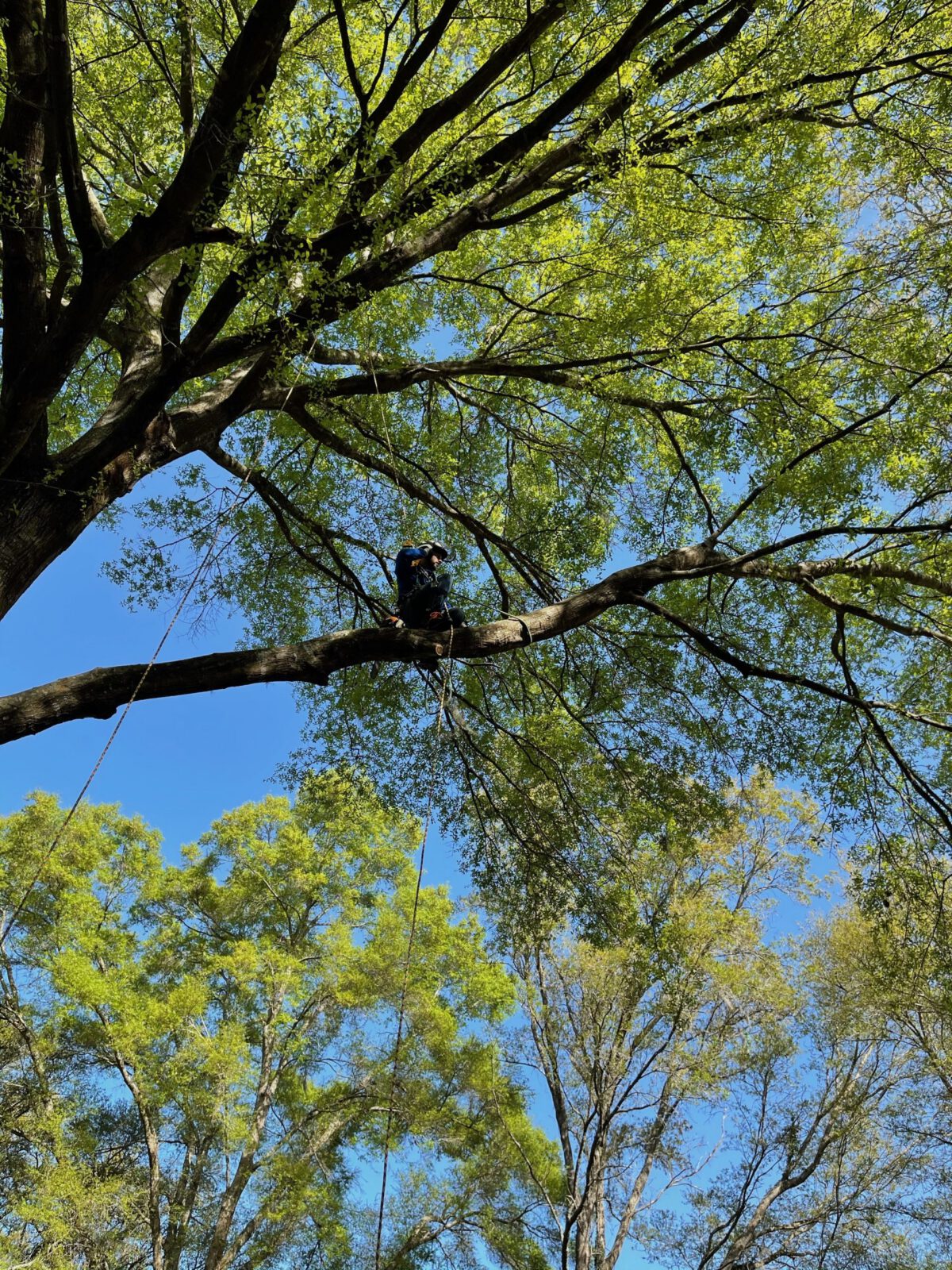
Tree Trimming and Pruning
We cut the right limbs in the right places so your tree heals and keeps growing. We will never top a tree, because topping leaves it weaker than it started.
The short version
Most tree problems start with a bad trim job.
Topping, lion tailing and flush cuts are the three things that quietly ruin Florida shade trees. All three are common. All three look neat for a season. And all three leave your tree with weak new growth, rot working its way in, and a much better chance of coming down in the next storm.
There is an industry standard that prevents all of that. It covers exactly where the cut goes, how much of a tree you can safely take at one time, and which branches should come off. We follow it on every job, whether it is one crape myrtle or a row of laurel oaks down your driveway.
What we can do for your trees
- Clean out the dead, dying and rubbing branches
- Raise the canopy to clear your driveway, your roof or the sidewalk
- Pull the canopy back off your house the right way, without topping it
- Take the deadwood out of big oaks, which is the best money you can spend on safety
- Thin the canopy before hurricane season so wind passes through instead of pushing it over
- Prune palms properly, taking the dead fronds only, never hurricane cutting them
- Shape young trees now so you are not paying to fix them in fifteen years
How it works
What a good trim job looks like
Every cut has a reason
We remove a specific branch to solve a specific problem. We do not just shorten everything by three feet and call it done.
We cut in the right spot
Just outside the swollen ring where the branch meets the trunk, so your tree can seal the wound over. Cut it flush and it never closes properly.
We do not take too much at once
Removing more than about a quarter of a mature tree at one time stresses it badly. Big reductions get split across two or three visits.
We never top a tree
Topping forces out weak, fast growing shoots. Those are the exact limbs that snap off in the next storm and land on your car.
We clean up after ourselves
Chips and limbs leave with us, and we rake out the beds underneath.
From our jobs
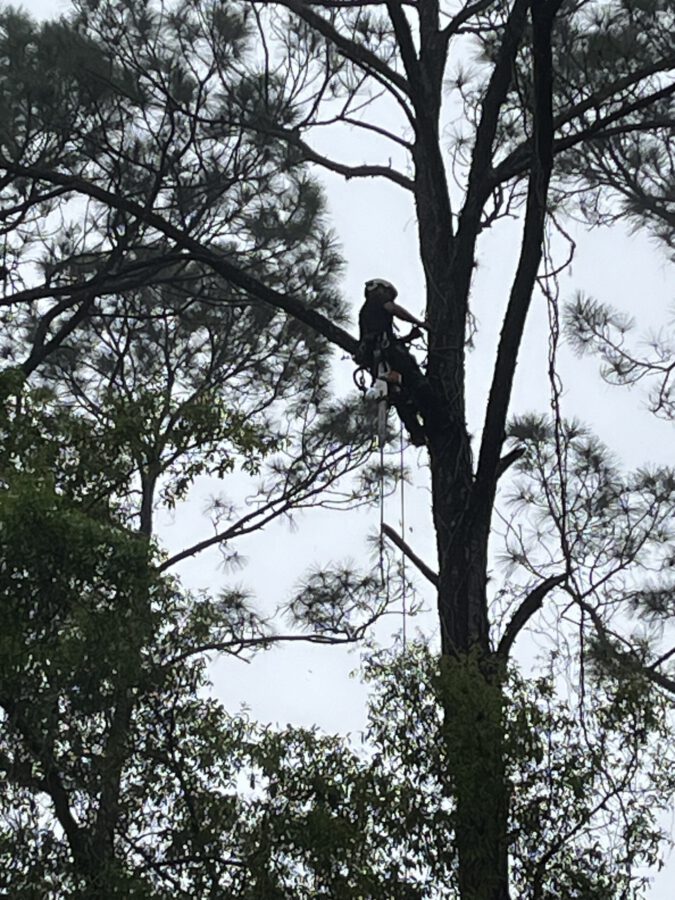
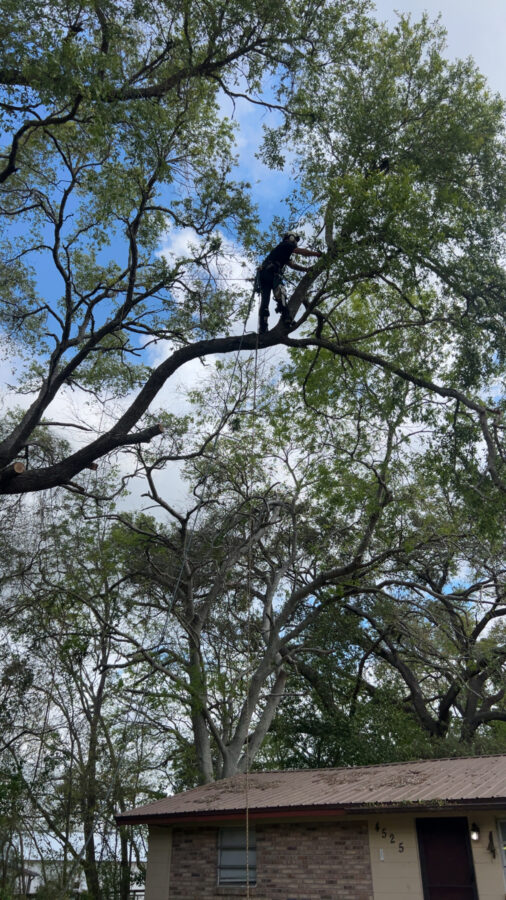
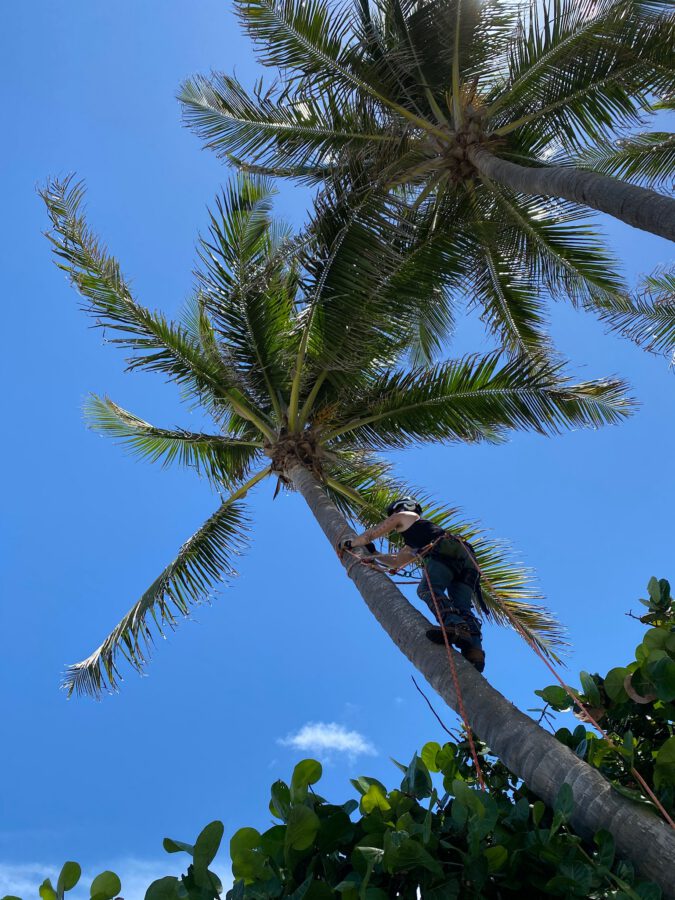
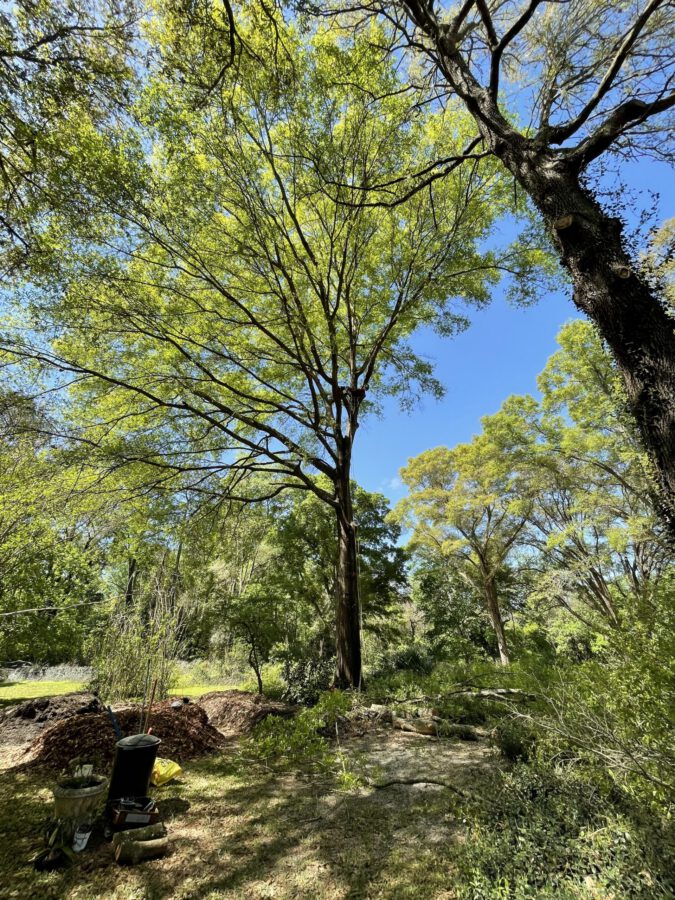
Real photos from our own jobs
Questions
Questions people ask us about this
When is the best time to trim in North Central Florida?
Dead and dangerous limbs come off whenever you spot them. For shaping most hardwoods, late winter into early spring is best, before the new growth comes on. Storm thinning should happen before June, not while you are watching a cone on the news.
Can you just cut it back so it stops touching my roof?
Yes. Done right, that means cutting back to a branch that can take over and keep growing in a better direction. What we will not do is top it, which leaves ugly stubs and grows back worse within two years.
Do you hurricane cut palms?
No. Stripping a palm down to a few fronds pointing straight up takes away the food it needs and actually makes it more likely to snap, not less. We take the dead and hanging fronds, the seed pods and the fruit stalks. That is what actually cuts down the mess and the danger.
How often should big oaks be trimmed?
A healthy mature live oak or laurel oak usually needs attention every three to five years, and mostly that means pulling the deadwood out. Trees hanging over a house, a pool or where you park are worth checking more often, because if something lets go there it costs you a lot more.
Also from Arbor Care
Free estimate
Get a free estimate today.
Tell us what is going on. We will come look at the tree, tell you honestly whether it needs to come down, and give you a price in writing before anyone starts cutting.
- Free estimate, and you are not obligated to book
- A certified arborist looks at your tree, not a salesman
- You get the price in writing before any work starts